Most work lunch advice fails on a Tuesday. The ideas are reasonable, the photographs are appealing, and none of it survives contact with a morning where the alarm went off twice, and the commute starts in eleven minutes. What gets eaten instead is whatever is nearest the office at one o'clock.
Grouping ideas by the time they genuinely take is more useful than grouping them by cuisine. Some lunches assemble in the three minutes between finding your keys and leaving, others need fifteen minutes the night before, and a few are worth a Sunday session because they cover most of the week. Knowing which is which is what makes a routine hold.
What Makes a Work Lunch Hold Up
Office lunches have constraints that home meals do not, and the ones that work tend to share the same qualities:
- Enough protein to carry you to the end of the afternoon rather than to three o'clock
- Texture that survives several hours in a bag, since sogginess ruins more lunches than flavor does
- No reliance on a microwave, which may be occupied, filthy, or absent
- Components that can be kept apart and combined at the desk
- A container that seals properly and does not leak into a laptop bag
- Something you can eat at a keyboard without a knife and fork performance
- Food you will still want at noon, decided at seven in the morning
The last point defeats more plans than any of the others. Assembling five identical containers on Sunday is efficient, and most people are bored of them by Wednesday, which is how good intentions turn into a queue at the counter downstairs.

Lunch Ideas by How Long They Take
Under Five Minutes in the Morning
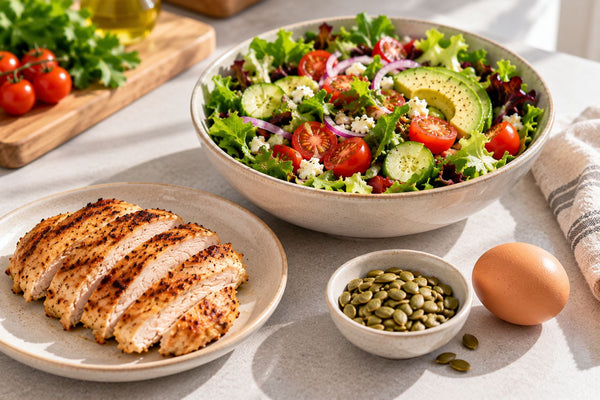
Grain bowls built from components already in the fridge come together fastest. Cooked quinoa or rice from the night before, a scoop of chickpeas, whatever vegetables are already cut, and a protein on top takes about three minutes if the parts exist.
A loaded yogurt pot works on the same principle in savory or sweet form, with Greek yogurt as the base and seeds, fruit, or cucumber and herbs on top. Jar salads assemble just as quickly when the dressing goes in first, hardy vegetables next, and leaves on top, which keeps everything crisp until it is tipped into a bowl.
Wraps and pitas are the most forgiving of the fast options, since filling them is a one-step job and they travel better than a sandwich does. Tinned fish, leftover roast chicken or falafel all work with whatever salad components are to hand.
Fifteen Minutes the Night Before
Roasting a tray of vegetables while dinner cooks produces lunch for two days with almost no additional effort. Combined with a grain and a dressing the next morning, it becomes a bowl that holds up far better than a leafy salad.
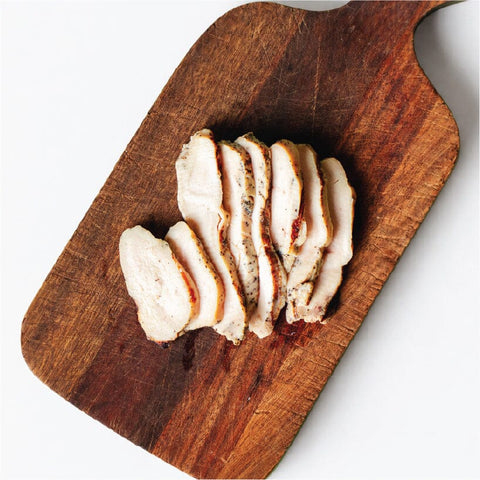
Cooking extra protein at dinner is the other high-return habit. An additional chicken breast, a few more falafel, or a second portion of tofu costs nothing in extra time and removes the morning's hardest decision.
Noodle salads built on soba or rice noodles improve overnight rather than deteriorating, which makes them unusual among lunches. Dressed the night before with sesame, lime, or peanut, they are better at noon than they were when assembled.
Batch Prepped on Sunday
Components rather than finished meals are what batch prep should produce. A pot of grains, a tray of roasted vegetables, a container of cooked protein and a jar of dressing combine into four or five visibly different lunches across the week, where four identical assembled containers become a chore by midweek.
Soups and stews freeze in individual portions and need only a container, which makes them the simplest cold-weather option where a microwave is available. Hard-boiled eggs keep for several days and solve the protein problem for whichever lunch needs rescuing.
Dressings are the most underrated batch item. A jar of vinaigrette or tahini dressing made on Sunday turns plain components into something worth eating all week, and it takes two minutes.
Most of the ideas below work cold, while soups and stews are the exception if you have access to a microwave.
Packing Lunch Without a Fridge
Two hours is the limit for anything containing cooked chicken, fish, eggs, or dairy, and a bag under a desk from eight until one is well past it. The practical answer is an insulated bag with an ice pack rather than a hopeful bet on the office air conditioning.
Several lunches are genuinely robust without refrigeration. Hummus and vegetable sticks, nut butter sandwiches, whole fruit, hard cheeses, cured items, tinned fish in oil and most grain salads without dairy all cope with a morning in a bag.
Shared office fridges deserve realism. They are frequently full by nine, occasionally emptied without warning, and not always as cold as they should be, which is why the insulated bag is the more reliable plan even in an office that has one.
What to Keep Stocked at the Office
A small supply kept at work rescues the days when nothing got packed, and it costs almost nothing to maintain. Tinned fish, nuts, seeds, oatcakes or crackers and a jar of nut butter all keep for months in a drawer and turn a sad desk situation into something resembling a meal.
Seasoning is the component most people never think to leave at work, and it changes plain food more than any ingredient does. A small bottle of olive oil, salt and pepper, a jar of chili flakes or a bottle of hot sauce will lift an uninspired grain bowl or a shop-bought salad that arrived underdressed.
Equipment deserves the same treatment. A proper fork and knife, a small cutting board, and a reusable container live in a drawer permanently and remove the daily question of whether you remembered cutlery. An insulated bag and a spare ice pack kept at the office cover the mornings you leave home without one.
How to Keep Lunch Interesting
Repetition is what kills a lunch routine, and the fix is structural rather than requiring more cooking. Keeping the same base components and rotating only the dressing and the topping produces five lunches that taste different from one shop.
Flavor direction is the easiest lever. The same grains, greens, and chicken go Mediterranean with lemon, feta, and olives, Mexican with lime, black beans, and coriander, or Asian with sesame, ginger, and edamame, without any additional preparation.
Texture deserves as much attention as flavor. Lunches that are uniformly soft get boring fast, and something crunchy added at the desk, whether seeds, nuts or a handful of crisp vegetables, changes the experience more than another ingredient would.
Balancing Prepared and Homemade Lunches
Preparing every lunch is not the obvious winner it is usually presented as. Weeks with early starts, travel, or back-to-back mornings leave no realistic window for assembly, and planning around an idealized week is how people end up with spoiled ingredients and a takeaway habit anyway.
Honest accounting helps here. A lunch prepared at home costs less in ingredients, and it costs ten to fifteen minutes a day plus a share of the shopping. Where those minutes are genuinely scarce, buying lunch two or three days a week and preparing the rest is a more durable routine than an ambitious plan that collapses by Wednesday.
Mixing the two tends to work better than committing fully to either. Prepared options cover the weeks that get away from you, home assembly covers the rest, and neither has to be all or nothing.

Conclusion: Start Small
Ideas are rarely the constraint. Pick the one tier that matches the mornings you genuinely have, run it for a fortnight before adding anything, and let the rest of the week be whatever it needs to be. A routine built for three lunches is still running in March, while the one built for five tends to end quietly in week two.
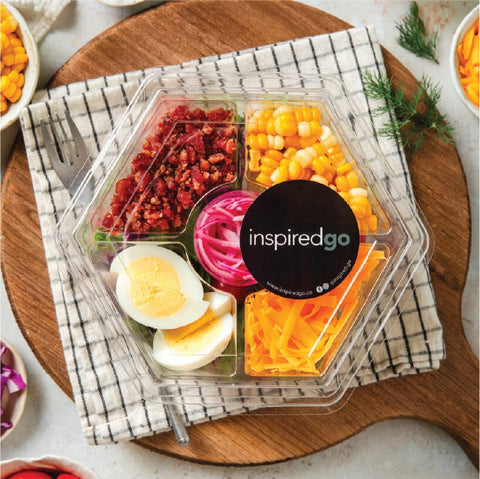
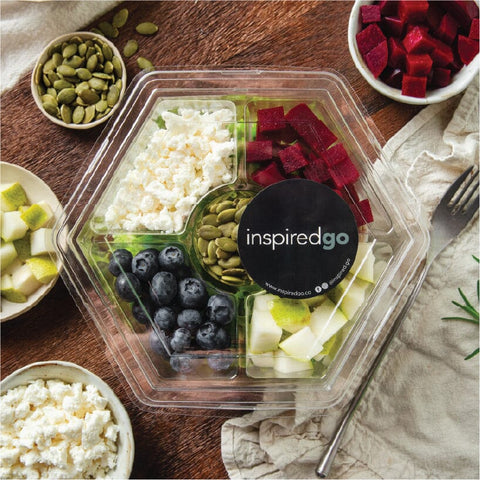
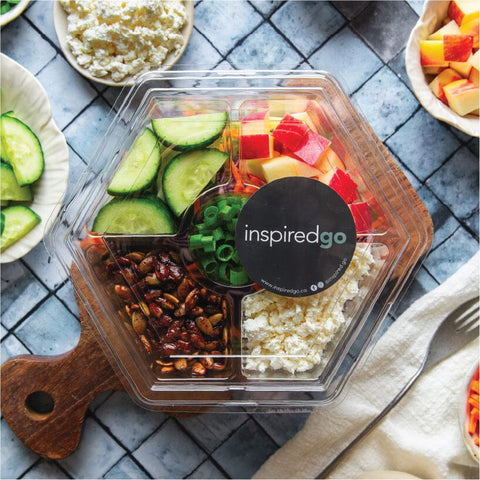
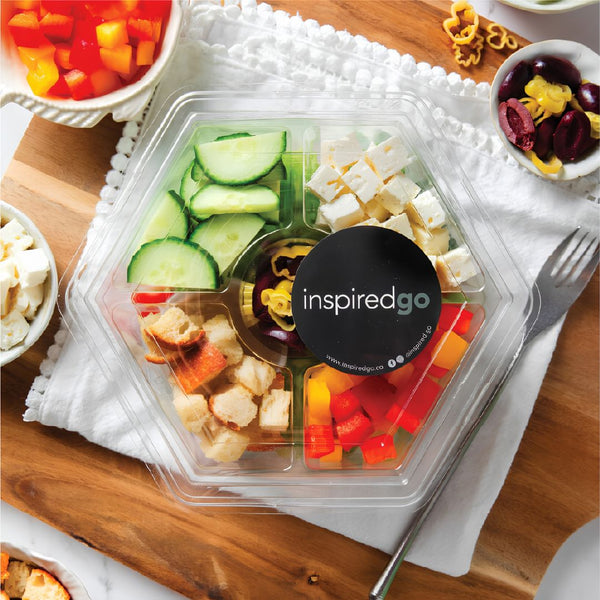
For the weeks when none of the above is realistic, Inspired Go delivers chef-designed salads and bowls with no subscription required, so you can cover a few days without committing to a standing order. The menu changes weekly, and nutrition information is published for every item.